Call: 08045802973
 Send Inquiry
 Send Inquiry
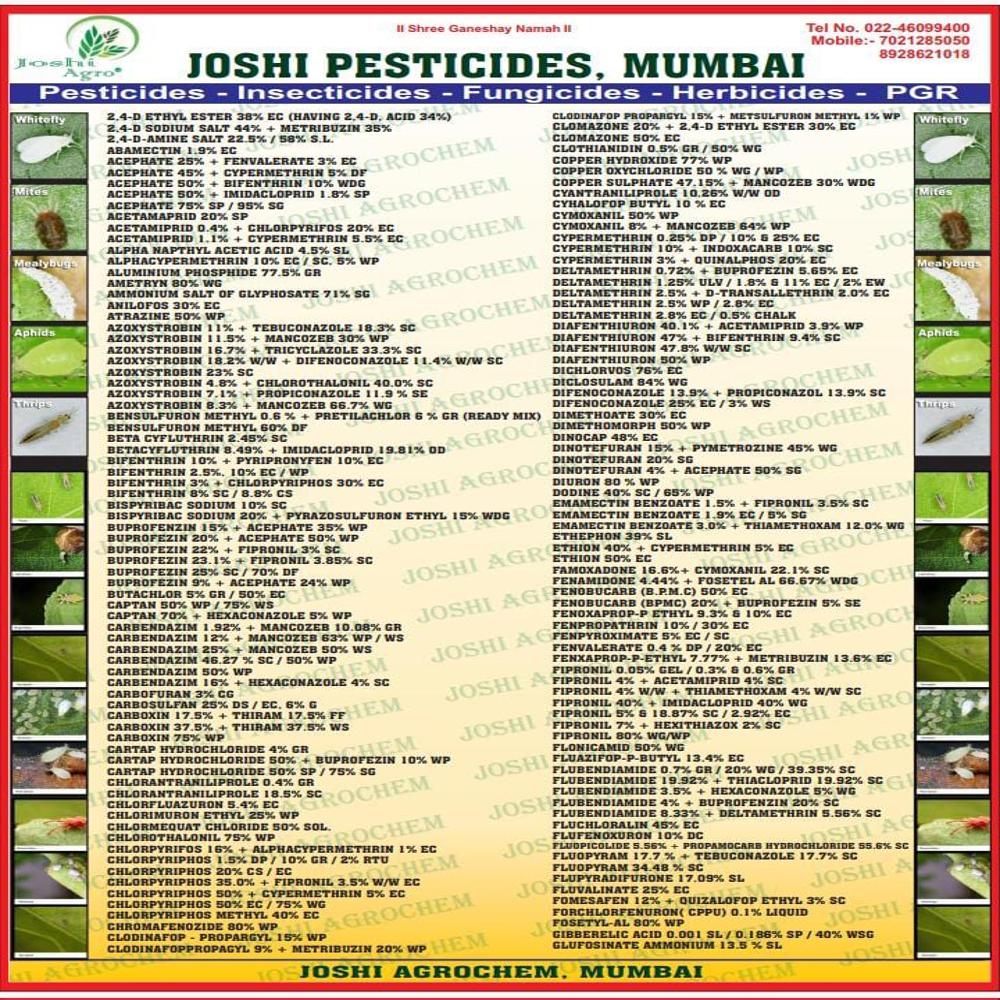
Pyriproxyfen 0.5% Gr / 10% EC
MOQ : 25 Kilograms
Pyriproxyfen 0.5% Gr / 10% EC Specification
- Molecular Formula
- C20H19NO3
- EINECS No
- 429-800-1
- Density
- 1.07 Gram per cubic centimeter(g/cm3)
- CAS No
- 95737-68-1
- Shape
- Granular / Liquid
- Color
- Off white (GR) / Yellow to amber (EC)
- Classification
- Insect Growth Regulator (IGR)
- Product Name
- Pyriproxyfen 0.5% Gr / 10% EC
- Melting Point
- 46.5-47.5C
- State
- Granular (GR) / Emulsifiable Concentrate (EC)
- Water Content Vol%
- 1.0% (GR)
- Appearance
- Off-white granules (GR) / Clear yellow to amber liquid (EC)
- Moisture (%)
- 1.0 (GR)
- Properties
- Juvenile hormone analog, inhibits development of insect larvae
- Active Ingredient
- Pyriproxyfen
- Ash %
- 3.0 (GR)
- Smell
- Faint characteristic odor
- Grade
- Agricultural Grade
- Purity(%)
- >= 95% (technical grade)
- Place of Origin
- India
- Ph Level
- 5.0 - 7.0 (1% aqueous solution)
- Storage Conditions
- Store in cool, dry, well-ventilated area, away from sunlight
- Mode of Action
- Insect growth regulator inhibiting metamorphosis
- Packaging
- 25 kg bag for GR, 1 L / 5 L / 20 L drum for EC
- Target Pests
- Whiteflies, leaf hoppers, aphids, thrips
- Formulation
- 0.5% Granule (GR), 10% Emulsifiable Concentrate (EC)
- Solubility in Water
- Emulsifiable (EC); Insoluble (GR)
- Usage
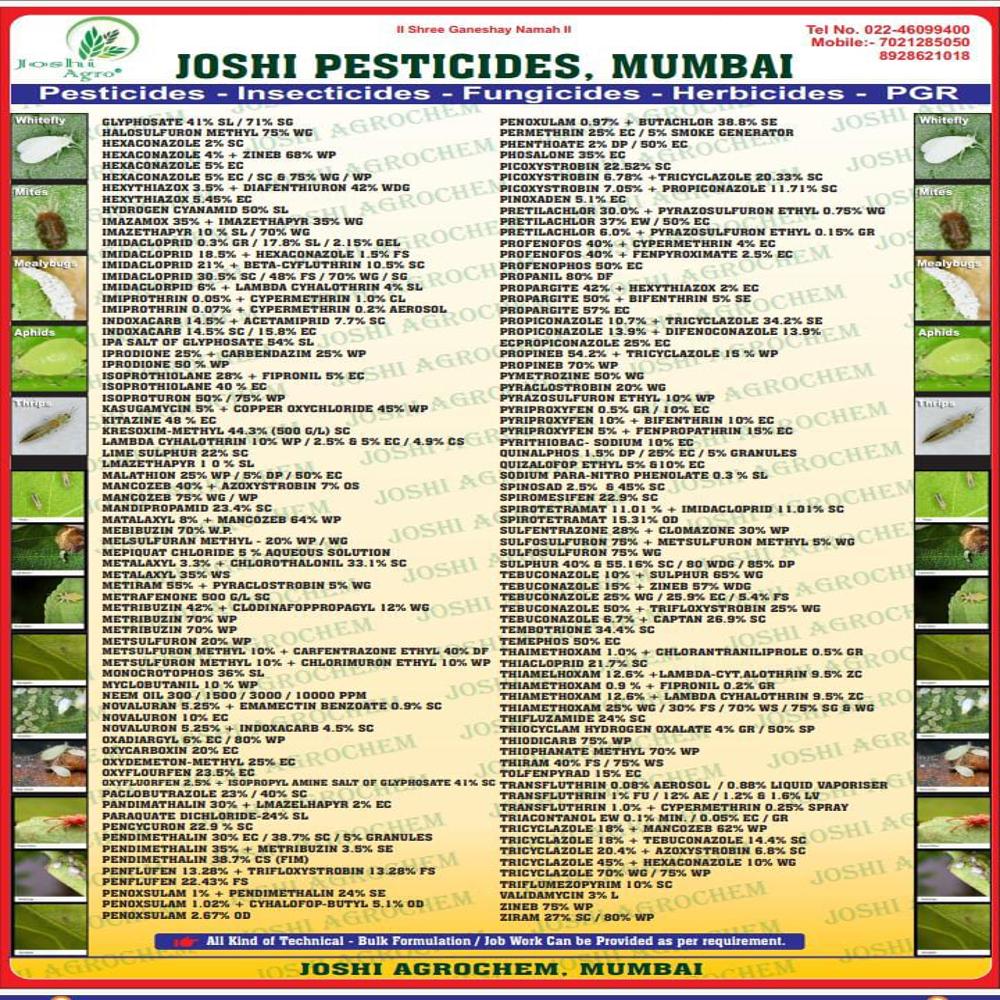
- Spray/Soil Application
- Recommended Dose
- 0.5-1.5 kg/acre (GR); 100-250 ml/acre (EC)
- Shelf Life
- 2 years
- Toxicity
- Low mammalian toxicity
Pyriproxyfen 0.5% Gr / 10% EC Trade Information
- Minimum Order Quantity
- 25 Kilograms
- Supply Ability
- 1000 Kilograms Per Month
- Delivery Time
- 7 Days
About Pyriproxyfen 0.5% Gr / 10% EC
Pyriproxyfen is a highly effective, synthetic Insect Growth Regulator (IGR) that acts as a juvenile hormone analog. It disrupts the normal growth, metamorphosis, and reproduction of pests rather than causing immediate death (knockdown).It is primarily used in two formulations for agricultural and public health applications:
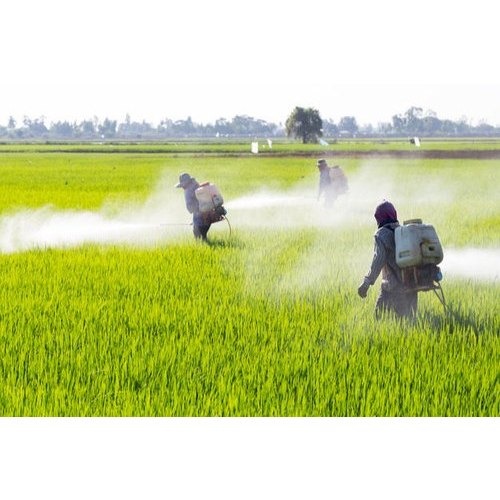
- 10% EC (Emulsifiable Concentrate): Foliar spray for crop protection.
- 0.5% GR (Granules): Soil/water application for larval control.
Key Benefits of Pyriproxyfen 10% EC (Agricultural Use)
- Comprehensive Pest Life-Cycle Control: It acts on eggs, nymphs, and pupae, preventing immature pests from maturing into adults and making existing adults sterile.
- Broad-Spectrum Sucking Pest Management: Highly effective against whiteflies, aphids, jassids, leaf miners, and scale insects.
- Long-Lasting Residual Protection: It offers extended control, reducing the need for repeated applications and lowering overall chemical costs.
- Translaminar Activity: When sprayed on the top surface of leaves, it moves to the lower surface, killing hidden pests.
- Phytotonic Effects: It has been known to induce a greening effect on plants, enhancing plant health and increasing yield.
- IPM Compatible & Safe for Beneficals: It has low toxicity to mammals and minimal impact on beneficial insects like bees and pollinators.
Key Benefits of Pyriproxyfen 0.5% Gr (Larvicide Use)
- Mosquito Larvae Management: Specifically used as an advanced larval control agent in standing water, preventing larvae from maturing into adult mosquitoes.
- Controlled Release Technology: The granular formulation allows for a gradual, sustained release of the active ingredient, ensuring continuous control in breeding sites like stagnant drains, wells, and cesspits.
- Effective at Low Dosages: High activity at very low concentrations makes it an economical choice for vector control programs.
Crop Suitability
Pyriproxyfen 10% EC is suitable for a wide range of crops including cotton, vegetables (okra, brinjal, chilli), fruits (citrus, grape-wine, mango, papaya), and tea.
Safety and Environmental Considerations
- Low Toxicity: It is generally safe for humans and non-target organisms.
- Toxic to Aquatic Life: While eco-friendly on land, it is hazardous to aquatic organisms and should not be released into water bodies.
- Application Precautions: Always use protective gear (masks, gloves) during application and avoid spraying during high wind.
Versatile Formulations for Enhanced Application
Pyriproxyfen is available as 0.5% granules (GR) for soil application and 10% emulsifiable concentrate (EC) for spraying. This versatility allows growers to select the most effective mode for their specific crop and pest infestation, maximizing insect control while minimizing application challenges.
Broad-Spectrum Insect Growth Regulation
As a juvenile hormone analog, Pyriproxyfen interrupts the development of harmful pest populations such as whiteflies, aphids, thrips, and leaf hoppers. Its targeted action helps prevent outbreaks and reduces dependence on conventional pesticides, supporting integrated pest management strategies.
Safe and Reliable Crop Protection
Formulated with low mammalian toxicity, Pyriproxyfen prioritizes user safety and environmental care. The product's stable shelf life and proven effectiveness ensure farmers benefit from consistent pest control, when stored in a cool, dry, well-ventilated area away from sunlight.
FAQ's of Pyriproxyfen 0.5% Gr / 10% EC:
Q: How should Pyriproxyfen 0.5% GR and 10% EC be applied for best results?
A: For Pyriproxyfen 0.5% GR, apply the recommended dose (0.5-1.5 kg/acre) directly to the soil. For 10% EC, dilute 100-250 ml per acre in water and use as a foliar spray. Follow local guidelines for application timing and frequency for optimal pest suppression.Q: What pests are effectively controlled by Pyriproxyfen formulations?
A: Pyriproxyfen 0.5% GR and 10% EC target a range of pests including whiteflies, aphids, thrips, and leaf hoppers by inhibiting their development from larvae to adulthood, thereby disrupting the pest life cycle.Q: When is the optimal time to use Pyriproxyfen in the crop cycle?
A: Apply Pyriproxyfen early in the pest lifecycle, preferably at the onset of larval infestation or when first-generation nymphs are detected. Early application ensures maximum efficacy by preventing pests from maturing and reproducing.Q: Where should Pyriproxyfen products be stored to maintain their quality?
A: Store Pyriproxyfen in a cool, dry, and well-ventilated area, away from direct sunlight and moisture, to ensure a stable two-year shelf life and maintain its effectiveness.Q: What is the advantage of using Pyriproxyfen compared to traditional insecticides?
A: Pyriproxyfen is an insect growth regulator with low mammalian toxicity and a specific action on juvenile hormone pathways. This results in effective, targeted pest management, minimizes harm to beneficial insects, and reduces the risk of resistance compared to many conventional pesticides.Q: What safety measures should be followed while handling Pyriproxyfen formulations?
A: While Pyriproxyfen has low toxicity, users should wear suitable protective equipment such as gloves and masks, avoid inhalation or direct contact, and wash thoroughly after handling to ensure safe use.Q: Can Pyriproxyfen be used in integrated pest management (IPM) programs?
A: Yes, Pyriproxyfen's targeted mode of action and minimal impact on non-target organisms make it an excellent choice for IPM programs, promoting sustainable pest control and crop health.
Tell us about your requirement

Price:
Quantity
Select Unit
- 50
- 100
- 200
- 250
- 500
- 1000+
Additional detail
Mobile number
Email

More Products in Insecticides Pesticides Category

Novaluron 5.25% + Indoxacarb 4.5% SC
Minimum Order Quantity : 25 Kilograms
Active Ingredient : Novaluron 5.25% w/w + Indoxacarb 4.5% w/w
Grade : Technical/Agrochemical Grade
Place of Origin : India
State : Other, Liquid Suspension
Product Name : Novaluron 5.25% + Indoxacarb 4.5% SC
Acephate 45% + Cypermethrin 5% DF
Minimum Order Quantity : 25 Kilograms
Active Ingredient : Acephate 45% w/w + Cypermethrin 5% w/w
Grade : AGRICLTURE
Place of Origin : India
State : Other, Granules (Dry Powder/DF)
Product Name : Acephate 45% + Cypermethrin 5% DF
Acephate 75% SP / 95% SG
Minimum Order Quantity : 25 Kilograms
Active Ingredient : Acephate
Grade : Technical/Agro Grade
Place of Origin : India
State : Other
Product Name : Acephate 75% SP / 95% SG

OXYFLUORFEN 23.5% EC
Minimum Order Quantity : 25 Kilograms
Active Ingredient : Oxyfluorfen 23.5% (w/w)
Grade : Agricultural Grade
Place of Origin : India
State : Liquid
Product Name : OXYFLUORFEN 23.5% EC

Contact Details
JOSHI AGROCHEM PHARMA PRIVATE LIMITED
GST : 27AAFCJ1227Q1Z8
- 813, Topiwala Center, Opp. Railway Station, Goregaon (West), Mumbai - 400062, Maharashtra, India
- Phone :08045802973
 Send Inquiry
- For Chemicals - Solvents :
Mobile. +918097911779
For Pharma - API's :
Mobile. +918655564472
For Agro - Pesticides :
Mobile. +918080701491
For Metals :
Mobile. +919322422799


Developed and Managed by Infocom Network Private Limited.
