
Call: 08045802973
 Send Inquiry
 Send Inquiry
Sodium pyruvate
Sodium pyruvate Specification
- Purity
- 99% or higher
- EINECS No
- 204-024-4
- Molecular Formula
- C3H3NaO3
- HS Code
- 29183000
- Solubility
- Highly soluble in water
- Grade
- Analytical grade
- Properties
- Stabilizes pH supports cellular metabolism and participates in biochemical reactions
- CAS No
- 113-24-6
- Physical Form
- White crystalline powder
- Molecular Weight
- 110.04 g/mol
- Appearance
- White crystalline powder
- Shape
- Powdered form
- Ingredients
- Sodium pyruvate (pure form)
- Density
- Gram per cubic centimeter(g/cm3)
- Storage
- Store at room temperature in a dry and well-ventilated area away from direct sunlight
- Melting Point
- 300C (decomposes)
- Taste
- Slightly salty
- Application
- Biochemical research cell culture media additive metabolic studies
- Smell
- Odorless
- Shelf Life
- 2 years if stored properly
- Ph Level
- Neutral ~7.0 in aqueous solution
- Usage
- Used in cell culture to support energy metabolism and for scientific research experiments
- Structural Formula
- HCOCOONa
- Poisonous
- NO
About Sodium pyruvate
Sodium pyruvate
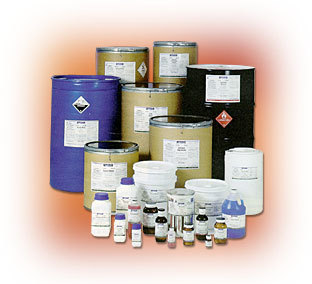
Joshi Chem are Contract Manufacturer, Exporter and Distributers of various Chemicals & Solvents. More then 500 products are ready available & supply as per specification require by client in all grades. Quality Supply With Customer Satisfaction - Since 1971.
FAQs of Sodium pyruvate:
Q: What is the physical form of Sodium pyruvate?
A: Sodium pyruvate is in the form of white crystalline powder.Q: What is the application of Sodium pyruvate?
A: Sodium pyruvate is commonly used in biochemical research, cell culture media additive, and metabolic studies.Q: How should Sodium pyruvate be stored?
A: Sodium pyruvate should be stored at room temperature in a dry and well-ventilated area, away from direct sunlight.Q: What is the purity of Sodium pyruvate?
A: Sodium pyruvate has a purity of 99% or higher.Q: What is the role of Sodium pyruvate in cell culture?
A: Sodium pyruvate is used in cell culture to support energy metabolism and for scientific research experiments.Q: What is the molecular weight of Sodium pyruvate?
A: The molecular weight of Sodium pyruvate is 110.04 g/mol.Q: What is the shelf life of Sodium pyruvate?
A: Sodium pyruvate has a shelf life of 2 years if stored properly.
Tell us about your requirement

Price:
Quantity
Select Unit
- 50
- 100
- 200
- 250
- 500
- 1000+
Additional detail
Mobile number
Email

More Products in Chemical Supplies Category
HEDP acid
Taste : Other, Slightly acidic
Appearance : Clear colorless to light yellow liquid or white crystalline solid
Ingredients : 1Hydroxyethylidene11diphosphonic acid
Storage : Other, Store in a cool dry place away from oxidizing agents
Usage : Used as a cleaning agent chelating agent and scale inhibitor in industrial processes
Poisonous : NO
Benzoyl Chloride
Taste : Other, Pungent and irritating (not suitable for ingestion)
Appearance : Clear to slightly yellow liquid
Ingredients : Pure benzoyl chloride (C7H5ClO)
Storage : Other, Stored in a cool dry and wellventilated area in tightly sealed containers away from water and incompatible substances.
Usage : Used as a chemical intermediate and reagent in various organic syntheses.
Poisonous : Yes highly toxic and corrosive, Other
p Aminophenol
Taste : Bitter
Appearance : White to slightly pink crystalline solid
Ingredients : 4aminophenol
Storage : Other, Store in a cool dry and wellventilated place away from light
Usage : Intermediate in manufacturing of dyes and pigments hair dye components and pharmaceuticals
Poisonous : YES
o-Chlorobenzaldehyde
Taste : Other, Not available
Appearance : Clear colorless to pale yellow liquid
Ingredients : Chlorinesubstituted benzaldehyde compound
Storage : Other, Store in a cool dry and wellventilated area away from sources of ignition
Usage : Used as a raw material in chemical synthesis
Poisonous : YES

Contact Details
JOSHI AGROCHEM PHARMA PRIVATE LIMITED
GST : 27AAFCJ1227Q1Z8
- 813, Topiwala Center, Opp. Railway Station, Goregaon (West), Mumbai - 400062, Maharashtra, India
- Phone :08045802973
 Send Inquiry
- For Chemicals - Solvents :
Mobile. +918097911779
For Pharma - API's :
Mobile. +918655564472
For Agro - Pesticides :
Mobile. +918080701491
For Metals :
Mobile. +919322422799


Developed and Managed by Infocom Network Private Limited.
