
Call: 08045802973
 Send Inquiry
 Send Inquiry
Palmitic acid
Palmitic acid Specification
- Density
- 0.85 Gram per cubic centimeter(g/cm3)
- Usage
- Surfactant emulsifier and texture agent in various products
- Solubility
- Insoluble in water; soluble in alcohol ether and benzene
- Melting Point
- 62.9 °C
- Structural Formula
- CH3-(CH2)14-COOH
- Smell
- Faint odor
- Shelf Life
- 2 years if properly stored
- Properties
- Fatty acid with high stability; used industrially and in consumables
- Molecular Formula
- C16H32O2
- Application
- Used in cosmetics food additives soaps and pharmaceuticals
- Ph Level
- Neutral (approximately 7.0)
- Appearance
- White or pale yellow crystalline solid
- Taste
- Tasteless
- Physical Form
- Solid
- Shape
- Flake or powder form
- Ingredients
- Palmitic acid (pure)
- HS Code
- 38237000
- EINECS No
- 200-312-9
- CAS No
- 57-10-3
- Poisonous
- NO
- Purity
- 99% minimum
- Storage
- Store in a cool dry and well-ventilated area away from heat and sources of ignition
- Molecular Weight
- 256.42 g/mol
- Refractive Rate
- 1.428 (liquid at 90°C)
- Grade
- Industrial grade Food grade
About Palmitic acid
Joshi Chem are Contract Manufacturer, Exporter and Distributers of various Chemicals & Solvents. More then 500 products are ready available & supply as per specification require by client in all grades. Quality Supply With Customer Satisfaction - Since 1971.FAQs of Palmitic acid:
Q: What are the main applications of Palmitic acid?
A: Palmitic acid is commonly used in cosmetics, food additives, soaps, and pharmaceuticals.Q: What is the physical form of Palmitic acid?
A: Palmitic acid is in a solid form, appearing as white or pale yellow crystalline flakes or powder.Q: Is Palmitic acid safe for use?
A: Yes, Palmitic acid is not poisonous, making it safe for various industrial and consumable applications.Q: What is the shelf life of Palmitic acid?
A: When properly stored, Palmitic acid has a shelf life of 2 years.Q: In which products can Palmitic acid be used as an ingredient?
A: Palmitic acid is used as a surfactant, emulsifier, and texture agent in various products due to its properties and stability.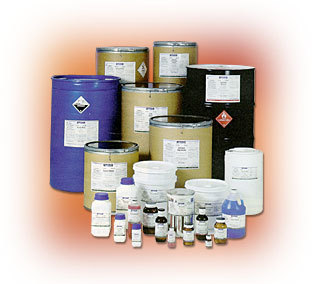
Tell us about your requirement

Price:
Quantity
Select Unit
- 50
- 100
- 200
- 250
- 500
- 1000+
Additional detail
Mobile number
Email

More Products in Chemical Supplies Category
Molybdenum trioxide
Usage : Used in industrial processes optical coatings lubricants and chemical synthesis
Density : 4.69 Gram per cubic centimeter(g/cm3)
Melting Point : 795 C
Solubility : Slightly soluble in water soluble in strong acids and bases
Structural Formula : O=Mo=O with one additional oxygen doublebonded to Mo
Properties : High melting point stable in air acts as an oxidizing agent under heat
Isopropyl myristate
Usage : Cosmetics topical pharmaceutical preparations and food industry
Density : 0.85 Gram per cubic centimeter(g/cm3)
Melting Point : 2C
Solubility : Insoluble in water soluble in organic solvents
Structural Formula : CH3(CH2)12COOCH(CH3)2
Properties : Neutral nonoily and moisturizing agent
Malonic acid
Usage : Used in resin manufacturing flavorings intermediates for organic synthesis
Density : 1.619 Gram per cubic centimeter(g/cm3)
Melting Point : 135137C
Solubility : Soluble in water ethanol and ether
Structural Formula : HOOCCH2COOH
Properties : Acidic hygroscopic and stable under normal conditions
PhenylAcetic Acid
Usage : Key raw material for producing penicillin derivatives perfumes and flavoring agents
Density : 1.081 Gram per cubic centimeter(g/cm3)
Melting Point : 7677C
Solubility : Slightly soluble in water; highly soluble in organic solvents such as ethanol ether and benzene
Structural Formula : C6H5CH2COOH
Properties : Organic compound with aromatic ring and carboxylic acid functionality; exhibits moderate acidity

Contact Details
JOSHI AGROCHEM PHARMA PRIVATE LIMITED
GST : 27AAFCJ1227Q1Z8
- 813, Topiwala Center, Opp. Railway Station, Goregaon (West), Mumbai - 400062, Maharashtra, India
- Phone :08045802973
 Send Inquiry
- For Chemicals - Solvents :
Mobile. +918097911779
For Pharma - API's :
Mobile. +918655564472
For Agro - Pesticides :
Mobile. +918080701491
For Metals :
Mobile. +919322422799


Developed and Managed by Infocom Network Private Limited.
