
Call: 08045802973
 Send Inquiry
 Send Inquiry
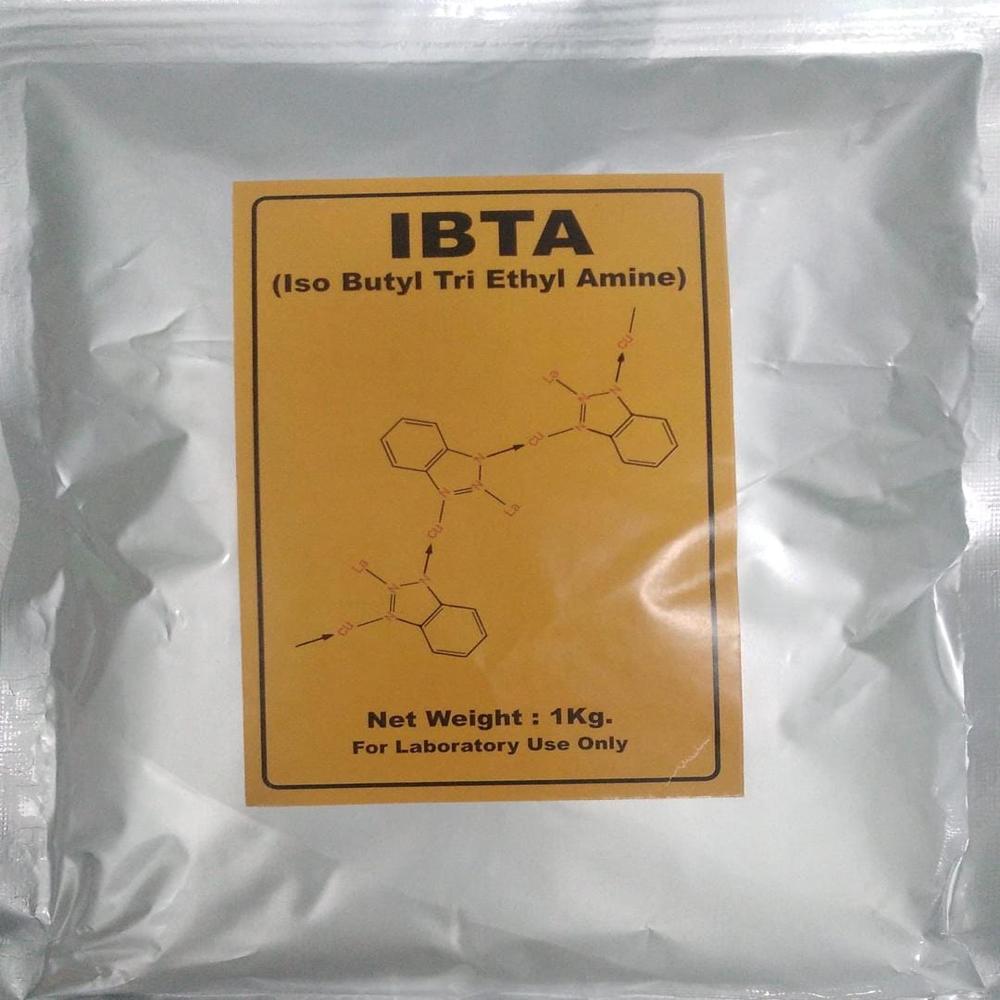
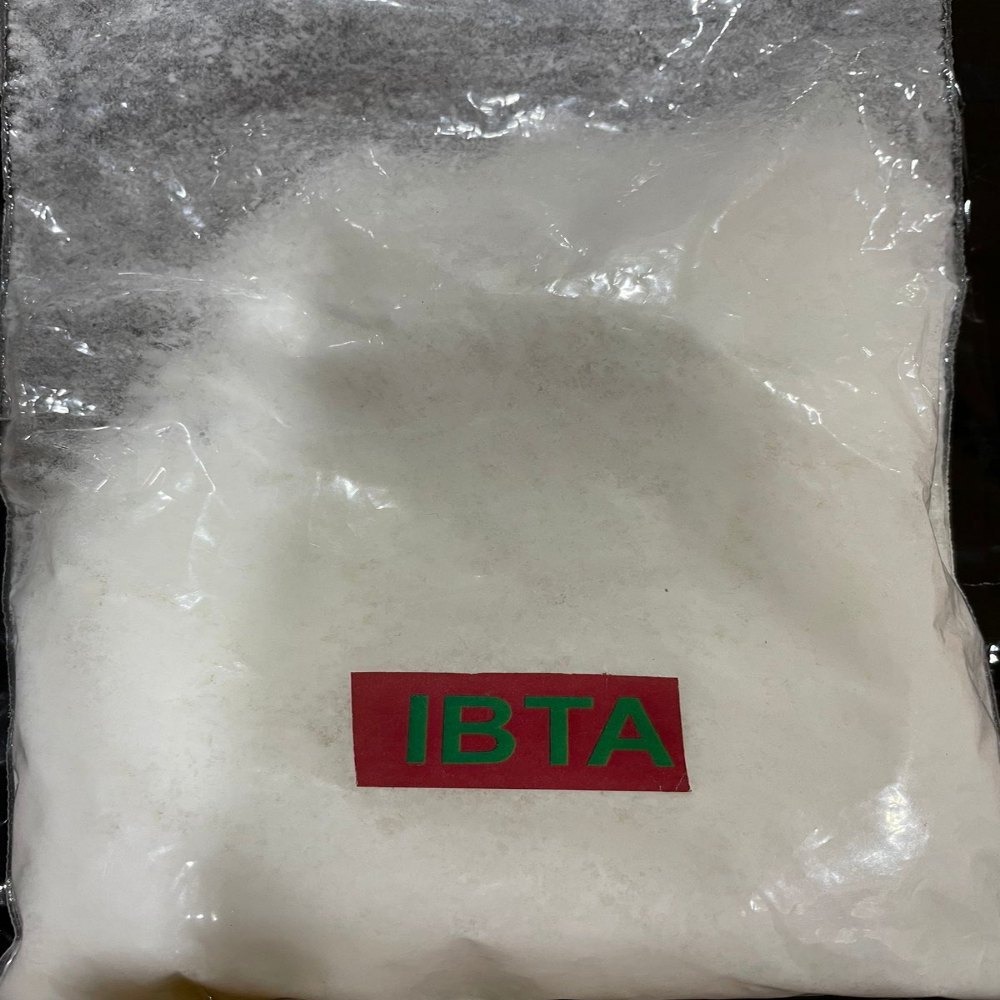
IBTA (ISO BUTYL TRI ETHYL AMINE
Price 1800.0 INR/ Kilograms
MOQ : 1 Kilograms
IBTA (ISO BUTYL TRI ETHYL AMINE Specification
- Dosage
- As per requirement/application
- Classification
- Industrial Chemical
- Chemical Name
- Other
- Other Names
- IBTA, N,N-Diethyl-N-isobutylamine
- Type
- Aliphatic Tertiary Amine
- Physical State
- Liquid
- Release Type
- Other
- CAS No
- 997-81-5
- Purity(%)
- 98%
- Application
- Agriculture
- Color
- White
- Solubility
- Soluble in organic solvents, insoluble in water
- Storage
- Store in cool, dry, well-ventilated area away from sunlight
- Shelf Life
- 2 years under recommended storage conditions
- Molecular Weight
- 157.3 g/mol
- Odor
- Amine-like, characteristic
- Packaging
- HDPE drums, 170 kg net weight
- Molecular Formula
- C10H23N
- Flash Point
- 54C (closed cup)
- Density
- 0.783 g/cm3 at 25C
- Boiling Point
- 186-188C
- pH
- Alkaline
- HS Code
- 29211990
IBTA (ISO BUTYL TRI ETHYL AMINE Trade Information
- Minimum Order Quantity
- 1 Kilograms
- FOB Port
- MUMBAI
- Payment Terms
- Others
- Supply Ability
- 1000 Kilograms Per Month
- Delivery Time
- 7 Days
- Packaging Details
- 25 KG
- Main Export Market(s)
- Western Europe, North America, South America, Eastern Europe, Middle East, Australia, Central America, Africa, Asia
- Main Domestic Market
- All India
- Certifications
- YES
About IBTA (ISO BUTYL TRI ETHYL AMINE
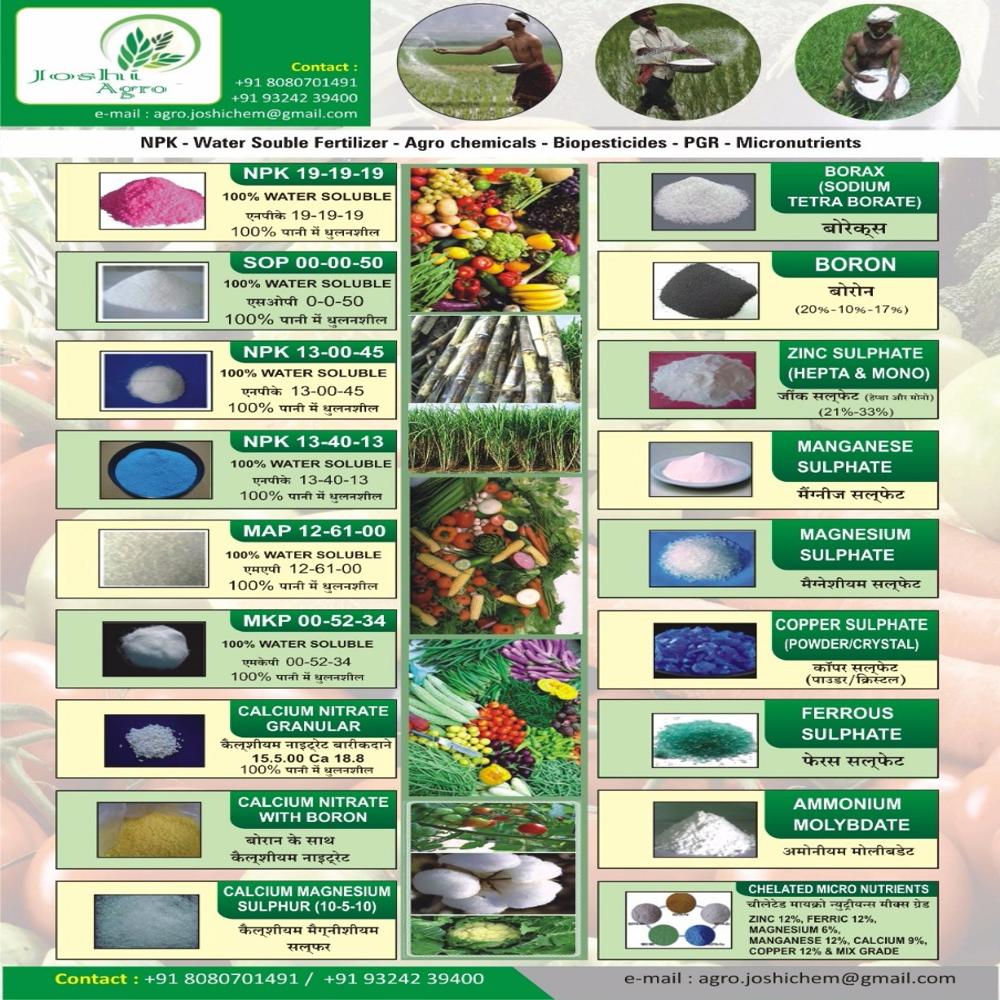
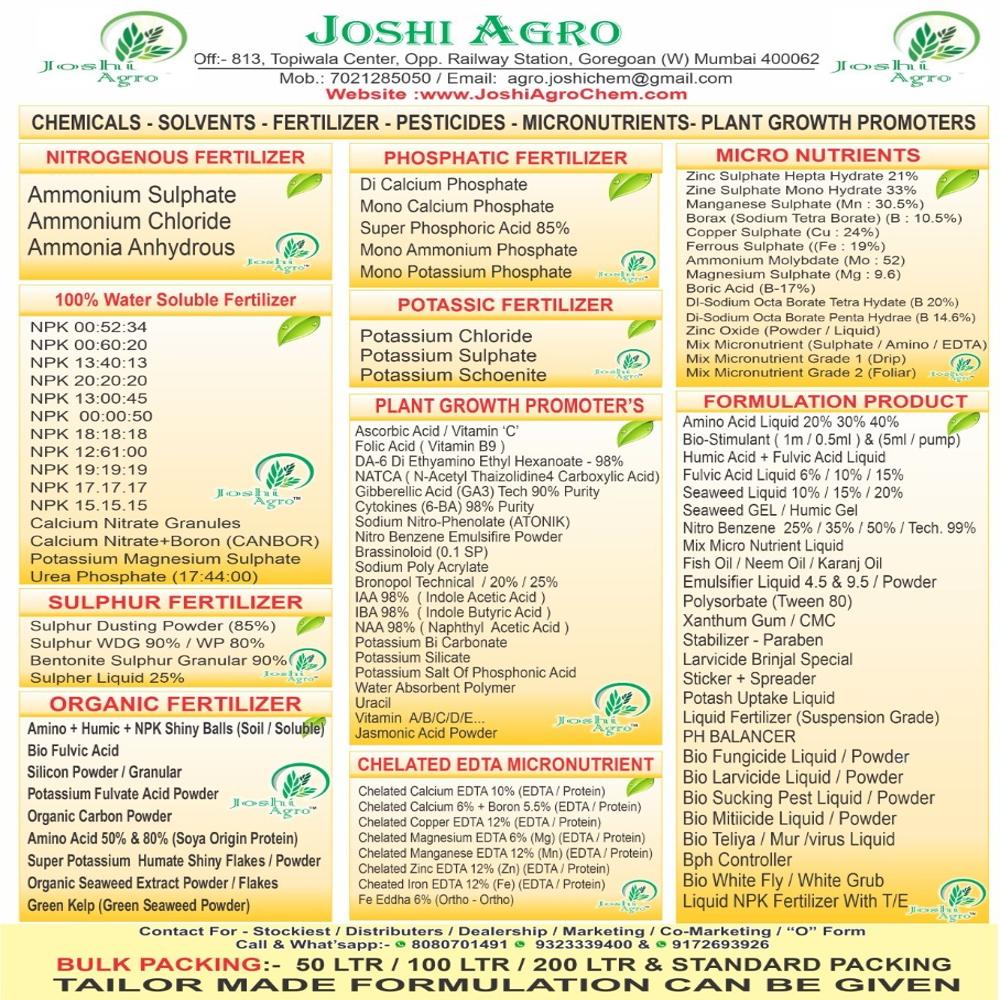
JOSHI AGROCHEM, MUMBAI SUPPLIER OF IBTA (ISO BUTYL TRI ETHYL AMINE AND WIDE RANGE OF PGR1 KG PACKING OR 25 KG AVAILEBLE
IBTA (Isobutyl Triethyl Amine)
- Photosynthesis: Increases CO absorption, boosting photosynthesis by over 21%.
- Nutrient & Protein: Enhances storage of proteins and amino acids in plant tissues.
- Cellular Growth: Promotes cell division and enzyme synthesis.
- Biomass & Yield: Increases fruit/vegetable biomass and promotes flowering.
- Stress Resistance: Improves plant immunity against diseases, drought, and cold.
Tell us about your requirement

Price:
Quantity
Select Unit
- 50
- 100
- 200
- 250
- 500
- 1000+
Additional detail
Mobile number
Email

More Products in Agro Fertilizer Category
AMMONIUM SULPHATE
Application : Other, Fertilizer agricultural chemicals and industrial applications
Storage : Store in cool and dry conditions away from moisture
Solubility : Soluble in water
Classification : Other, Inorganic salt
Release Type : Fast release, Other
Type : Other, Nitrogen fertilizer
BESSWAX
Application : Other, Cosmetics, Pharmaceuticals, Candle Making, Polishes
Storage : Cool, Dry Place
Solubility : Insoluble in water
Classification : Other, Wax
Release Type : Quick
Type : Other, Natural
CALCIUM MAGNESIUM SULPHUR
Application : Other, Soil Amendment, Fertilizer
Storage : Dry and Cool Place
Solubility : Moderate in Water
Classification : Other, Inorganic Fertilizer
Release Type : Controlled
Type : Other, Agricultural Grade
Emulsifier Powder
Application : Agriculture
Storage : Cool & Dry Place
Solubility : 100% Water Soluble
Type : Other, Emulsifier Powder

Contact Details
JOSHI AGROCHEM PHARMA PRIVATE LIMITED
GST : 27AAFCJ1227Q1Z8
- 813, Topiwala Center, Opp. Railway Station, Goregaon (West), Mumbai - 400062, Maharashtra, India
- Phone :08045802973
 Send Inquiry
- For Chemicals - Solvents :
Mobile. +918097911779
For Pharma - API's :
Mobile. +918655564472
For Agro - Pesticides :
Mobile. +918080701491
For Metals :
Mobile. +919322422799


Developed and Managed by Infocom Network Private Limited.
