Call: 08045802973
 Send Inquiry
 Send Inquiry
Fenitrothion
Fenitrothion Specification
- EINECS No
- 204-525-7
- Grade
- Agrochemical Grade
- Appearance
- Yellow to brown liquid
- Active Ingredient
- Fenitrothion
- Water Content Vol%
- 0.5%
- Color
- Yellow to brown
- Molecular Formula
- C9H11NO5PS
- CAS No
- 122-14-5
- Place of Origin
- China
- Ash %
- 0.1%
- Density
- 1.350 Gram per cubic centimeter(g/cm3)
- Ph Level
- 5-7
- State
- Liquid
- Smell
- Characteristic phenolic odour
- Melting Point
- 3638C
- Product Name
- Fenitrothion
- Purity(%)
- 95%
- Properties
- Contact and stomach insecticide, acts by inhibiting cholinesterase activity.
- Moisture (%)
- 0.5%
- Shape
- Liquid
- Refractive Index
- 1.548 (25C)
- Toxicity
- Moderately toxic to warm-blooded animals
- Solubility
- Slightly soluble in water, soluble in organic solvents
- Storage
- Store in a cool, dry, well-ventilated area
- Stability
- Stable under normal conditions
- Vapor Pressure
- 1.1104 mmHg (25C)
- Flash Point
- 160C
- Application
- Used to control pests in rice, cereals, fruits, and vegetables
- Boiling Point
- 140C at 0.1 mm Hg
- Shelf Life
- 2 years
- Packing
- Drum / Bottle
Fenitrothion Trade Information
- Supply Ability
- 1000 Per Month
- Delivery Time
- 7 Days
About Fenitrothion
JOSHI AGRO & PESTICIDES offers wide range of INSECTICIDES - PESTICIDES - FUNGISCIDES - WEEDICIDES - HERBICIDES for all Crops. Contract Manufacturer - exporter distributers. All grades available in Technical and Bulk Formulation also in small ready to spray pack.Dependable Pest Control for Crops
Fenitrothion provides reliable protection for various crops such as rice, cereals, fruits, and vegetables. Its dual action as a contact and stomach insecticide results in efficient pest eradication, which ultimately supports healthy crop yields and food production. The formulations stability and efficacy make it a favored agrochemical solution among farmers and agricultural professionals.
Safe Storage and Handling Advice
For optimal performance and longevity, Fenitrothion should be stored in a cool, dry, and well-ventilated area. Keeping the product away from direct sunlight and moisture extends its shelf life and maintains its active properties. Proper handling, using safety gear, is also recommended due to its moderate toxicity to warm-blooded animals.
FAQs of Fenitrothion:
Q: How should Fenitrothion be applied to crops for best results?
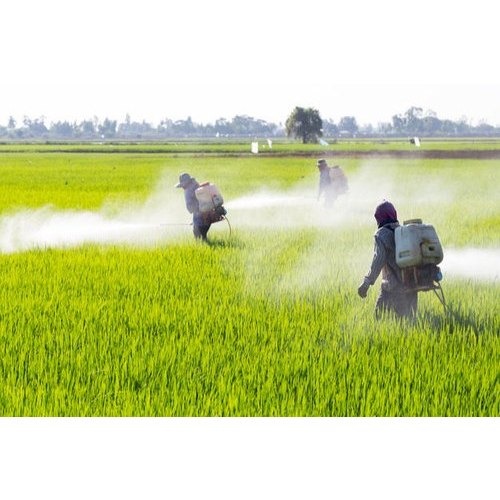
A: Fenitrothion should be applied using standard spraying equipment to the targeted pest-infested areas of rice, cereals, fruits, or vegetables. Always follow the manufacturers instructions and recommended dilution rates for optimal pest control and crop protection.Q: What is the primary benefit of using Fenitrothion in agriculture?
A: The main advantage is its effectiveness in controlling a broad spectrum of insect pests, leading to improved crop yields. Its dual contact and stomach action ensures that pests are efficiently eliminated, reducing crop damage and losses.Q: When is the best time to use Fenitrothion on crops?
A: It is advisable to use Fenitrothion at the early onset of pest infestation for maximum efficacy. Always apply during periods when pests are active and avoid application close to harvest to ensure safe residue levels in crops.Q: Where should Fenitrothion be stored to maintain its efficacy?
A: Store Fenitrothion in a cool, dry, and well-ventilated area, away from direct sunlight and moisture. This helps maintain its stability and extends its shelf life for up to two years.Q: What safety precautions should be followed when handling Fenitrothion?
A: Wear appropriate protective gear such as gloves and masks during handling and application, as Fenitrothion is moderately toxic to warm-blooded animals. Avoid skin and eye contact, and ensure proper ventilation when using the product.Q: What solvents can be used to dissolve Fenitrothion for application?
A: Fenitrothion is slightly soluble in water but dissolves more readily in organic solvents, making it suitable for liquid formulations and sprays used in pest control procedures.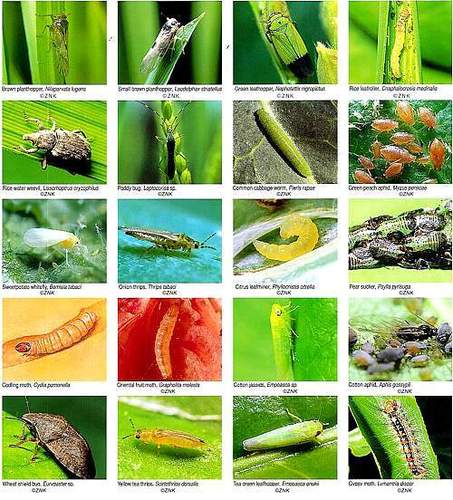
Tell us about your requirement

Price:
Quantity
Select Unit
- 50
- 100
- 200
- 250
- 500
- 1000+
Additional detail
Mobile number
Email

More Products in Insecticides Pesticides Category

Carboxin 37.5% + Thiram 37.5% WS
Minimum Order Quantity : 25 Kilograms
Color : Off white to greyish
Grade : Technical/Agrochemical Grade
Ph Level : 5.0 9.0 (1% solution)
Purity(%) : 99% (for Technical Grade actives)
Classification : Insecticide

Oxyfluorfen 2.5% + Isopropyl amine salt of Glyphosate 41% SC
Minimum Order Quantity : 25 Kilograms
Color : Light brown
Grade : Agricultural / Technical
Ph Level : 4.0 7.0
Purity(%) : Oxyfluorfen 2.5%, Glyphosate IPA 41%
Classification : Insecticide

Metsulfuron Methyl 10% + Chlorimuron Ethyl 10% WP
Minimum Order Quantity : 25 Kilograms
Color : Off White to Light Brown
Grade : Agricultural Grade
Ph Level : 5.5 7.5 (1% Solution)
Purity(%) : >= 98% (Technical Grade)
Classification : Insecticide
Acetamaprid 20% SP
Minimum Order Quantity : 25 Kilograms
Color : White
Grade : AGRICULTUER
Ph Level : 5.07.0 (1% solution)
Purity(%) : 98.0 (active parent Acetamaprid content)
Classification : other, Insecticide (Neonicotinoid)

Contact Details
JOSHI AGROCHEM PHARMA PRIVATE LIMITED
GST : 27AAFCJ1227Q1Z8
- 813, Topiwala Center, Opp. Railway Station, Goregaon (West), Mumbai - 400062, Maharashtra, India
- Phone :08045802973
 Send Inquiry
- For Chemicals - Solvents :
Mobile. +918097911779
For Pharma - API's :
Mobile. +918655564472
For Agro - Pesticides :
Mobile. +918080701491
For Metals :
Mobile. +919322422799


Developed and Managed by Infocom Network Private Limited.
