Call: 08045802973
 Send Inquiry
 Send Inquiry
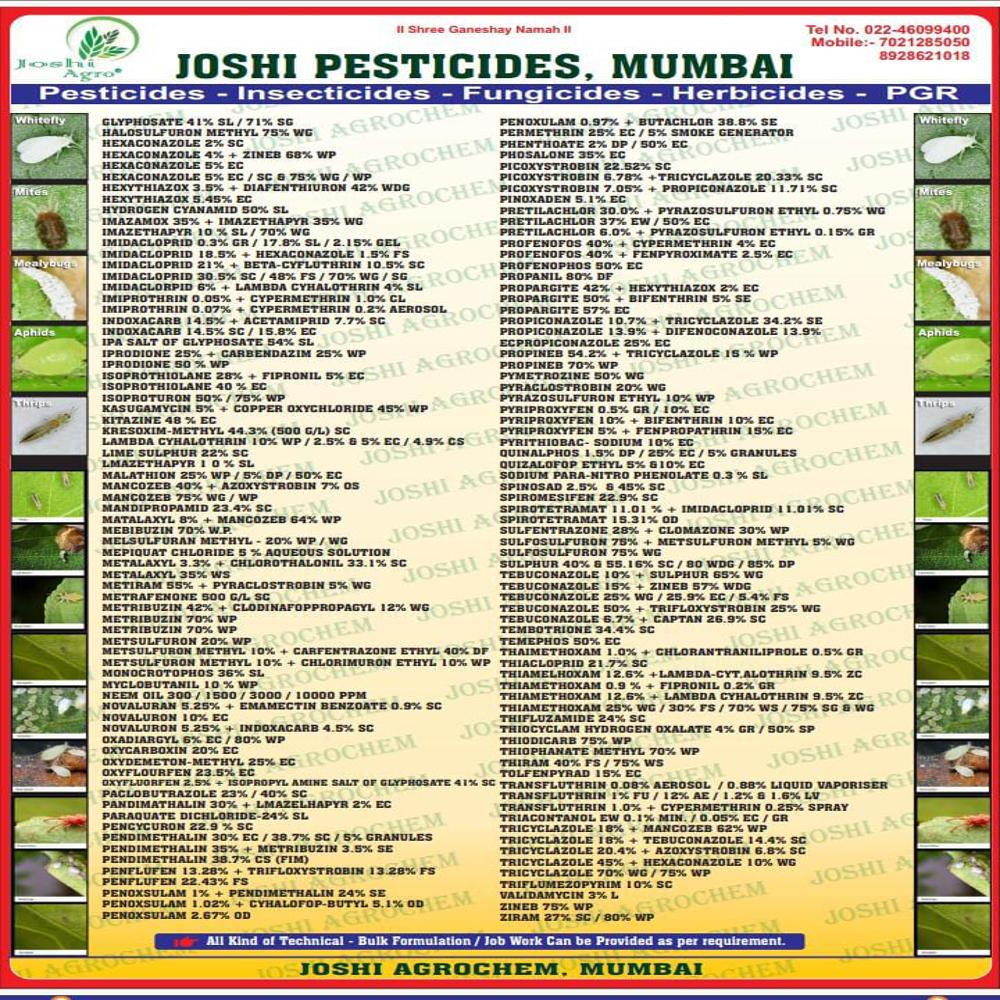
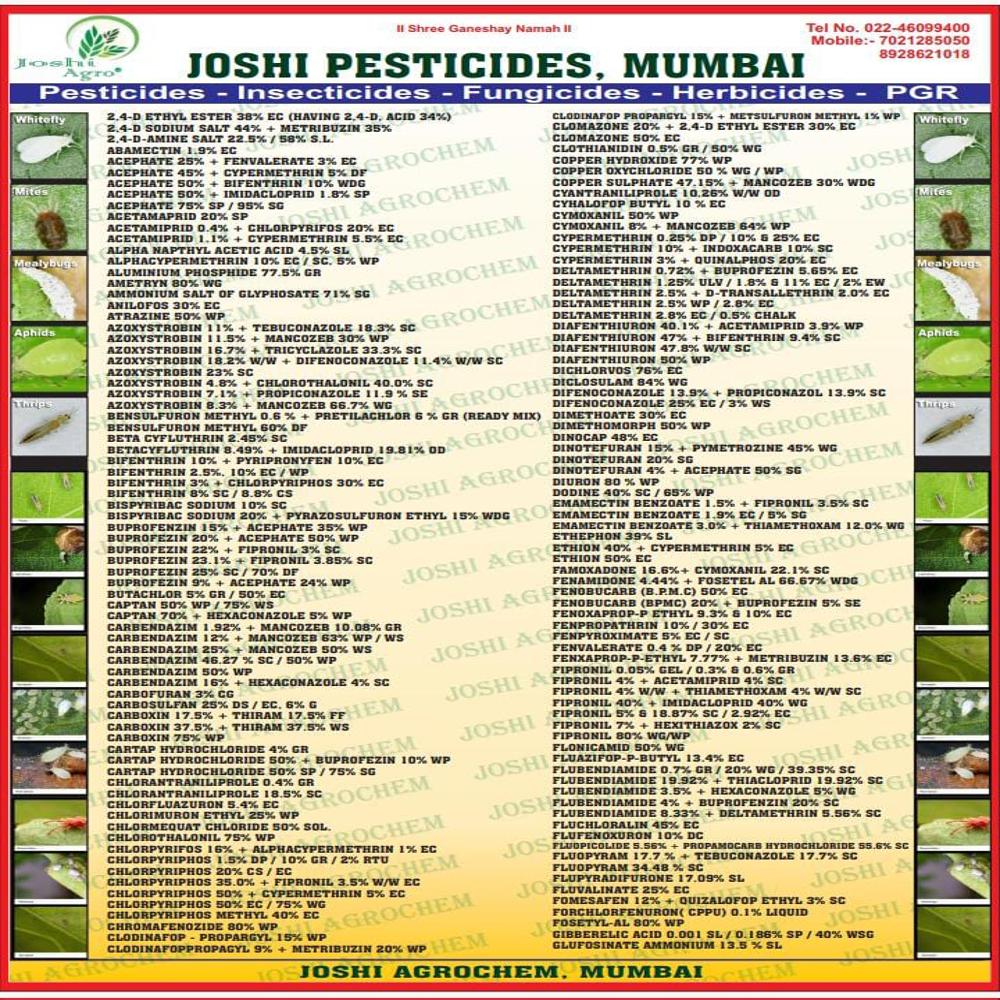
CHLORMEQUAT CHLORIDE 50% SOL
MOQ : 25 Kilograms
CHLORMEQUAT CHLORIDE 50% SOL Specification
- Density
- 1.20 Gram per cubic centimeter(g/cm3)
- Molecular Formula
- C5H13Cl2NO
- Ph Level
- 4.0 - 7.0
- Appearance
- other
- Classification
- Plant Growth Regulator
- Place of Origin
- India
- Product Name
- CHLORMEQUAT CHLORIDE 50% SOL
- Moisture (%)
- Not more than 49%
- CAS No
- 999-81-5
- Purity(%)
- 50%
- Shape
- other
- Color
- Colorless to pale yellow
- Smell
- Faint ammoniacal odor
- Melting Point
- Not applicable (liquid at room temperature)
- State
- Liquid
- EINECS No
- 213-666-4
- Grade
- AGRICULTURE
- Properties
- Soluble in water, hygroscopic
- Ash %
- Not more than 0.5%
- Active Ingredient
- Chlormequat chloride 50% (w/w)
- Water Content Vol%
- Not more than 48%
- Solubility
- Completely miscible with water
- Export Markets
- Global
- Packing
- Available in HDPE drums of 200 kg / 250 kg net
- Application
- Used in agriculture to regulate plant growth, reduce lodging in cereal crops
- Shelf Life
- 2 years in sealed container
- Flash Point
- Non-flammable
- Storage Conditions
- Store in cool, dry place, away from sunlight
- Boiling Point
- Approx. 104C
- Stability
- Stable under recommended storage conditions
- Hazard Class
- Not classified as hazardous for transport
CHLORMEQUAT CHLORIDE 50% SOL Trade Information
- Minimum Order Quantity
- 25 Kilograms
- Supply Ability
- 1000 Kilograms Per Month
- Delivery Time
- 7 Days
About CHLORMEQUAT CHLORIDE 50% SOL
Chlormequat Chloride 50% SL (Soluble Liquid) is a widely used plant growth regulator (PGR) and retardant in agriculture that acts as a gibberellin biosynthesis inhibitor. It is designed to manage vegetative growth, turning it into reproductive growth to maximize crop yield and quality.
Here are the key agricultural benefits of Chlormequat Chloride 50% SL:
1. Increases Crop Yield and Quality
- Redirects Energy: By inhibiting excessive, unwanted vegetative growth (shoots/leaves), it diverts plant energy toward the development of flowers, fruits, and grains, resulting in higher yields.
- Improves Fruit/Grain Set: It promotes better, more uniform fruit setting, prevents premature fruit and flower drop, and enhances fruit size, weight, and color, particularly in grapes, mangoes, and vegetables.
- Promotes Early Ripening: It leads to earlier and more uniform ripening of fruits.
2. Strengthens Plants and Reduces Lodging
- Sturdier Stems: It produces shorter, thicker, and stronger stems, which reduces lodging (the bending or falling over of crops) in cereals like wheat, rice, and barley.
- Extensive Root System: It promotes better root development, helping plants anchor better and absorb more nutrients.
3. Enhances Environmental Stress Resistance
- Drought and Flood Tolerance: Treated crops show increased tolerance to environmental stresses such as drought, heavy wind, and flooding.
- Transplanting Success: It helps seedlings manage stress better during transplanting.
4. Improves Photosynthesis and Foliage
- Darker Green Foliage: It increases chlorophyll content, leading to a darker green, healthier leaf color.
- Enhanced Photosynthesis: Increased chlorophyll promotes a higher rate of photosynthesis, supporting overall plant health.
5. Crop-Specific Benefits
- Cotton: Controls excessive, leafy growth (compacts the plant), increases boll retention, and improves fiber quality.
- Grapes: Used after pruning to improve bunch tightness, berry set, and overall yield.
- Potato/Garlic/Onion: Promotes better bulb development.
- Soybean/Groundnut: Increases production through better flower management.
6. Application and Usage
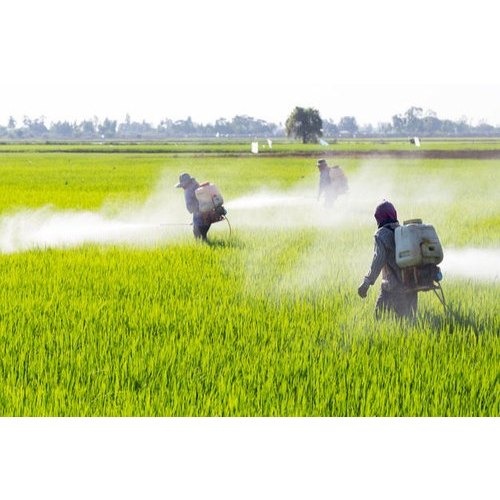
- Foliar Spray: Typically applied at a dosage of 1-2 ml per liter of water, depending on the crop and growth stage.
- Compatibility: It is generally compatible with most pesticides and fertilizers.
Key Precautions
- Concentration Danger: It is highly concentrated. Incorrect, high-dose usage can burn crops or stunt them permanently.
- Timing: Best applied during the pre-flowering or active vegetative growth stage.
Key Features and Benefits
CHLORMEQUAT CHLORIDE 50% SOL effectively regulates plant growth, particularly in cereal crops, minimizing lodging and maximizing yield quality. Its complete miscibility with water makes application easy and efficient. The product remains stable under recommended storage conditions and has a non-flammable, non-hazardous profile, ensuring safety during handling and shipping.
Application and Usage Guidelines
Ideal for agricultural practices, this growth regulator should be used according to documented crop requirements and local agricultural guidelines. Application typically occurs during active growth stages for optimal effect, always following the manufacturer's instructions for dilution and timing to achieve the best results.
Storage and Handling Recommendations
For maximum shelf life and product efficacy, CHLORMEQUAT CHLORIDE 50% SOL should be stored in a cool, dry place, protected from sunlight, and kept in sealed HDPE drums to prevent moisture absorption. Ensure containers are handled carefully to maintain product quality throughout storage and transportation.
FAQ's of CHLORMEQUAT CHLORIDE 50% SOL:
Q: How should CHLORMEQUAT CHLORIDE 50% SOL be applied in agriculture?
A: CHLORMEQUAT CHLORIDE 50% SOL should be diluted with water as per crop-specific recommendations before application. It is usually sprayed during the active growth phase of crops, particularly cereals, to control stem elongation and reduce lodging.Q: What is the main benefit of using CHLORMEQUAT CHLORIDE 50% SOL on cereal crops?
A: The main benefit is its ability to regulate plant growth and significantly reduce lodging, which helps improve overall crop stability and yield quality.Q: When is the best time to apply CHLORMEQUAT CHLORIDE 50% SOL to crops?
A: The ideal time for application is during the early growth stages of plants, typically when active vegetative development is occurring. Always refer to local agronomic guidelines for precise timing.Q: Where should this product be stored to maintain its stability and shelf life?
A: CHLORMEQUAT CHLORIDE 50% SOL should be kept in a cool, dry location, away from direct sunlight, in tightly sealed HDPE drums to avoid moisture contamination and ensure a shelf life of up to 2 years.Q: What are the recommended handling and safety precautions for this plant growth regulator?
A: While the product is non-flammable and not classified as hazardous for transport, it is advisable to use standard personal protective equipment during handling and to avoid contact with eyes, skin, or clothing. Follow all local safety regulations.Q: Is CHLORMEQUAT CHLORIDE 50% SOL suitable for global export markets?
A: Yes, it is manufactured for international distribution and meets regulatory requirements for global agricultural use, provided it is packed and shipped under recommended conditions.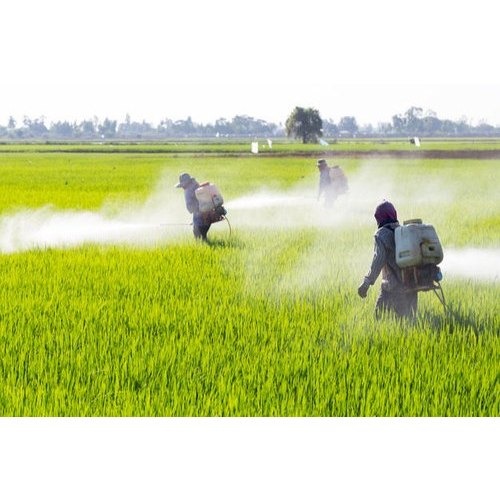
Tell us about your requirement

Price:
Quantity
Select Unit
- 50
- 100
- 200
- 250
- 500
- 1000+
Additional detail
Mobile number
Email

More Products in Insecticides Pesticides Category

Tricyclazole 20.4% + Azoxystrobin 6.8% SC
Minimum Order Quantity : 25 Kilograms
CAS No : 41814782 (Tricyclazole), 131860338 (Azoxystrobin)
Color : Light beige
Shape : other, Liquid
Purity(%) : Minimum 98% (active ingredient)
Smell : Other, Mild characteristic odor
Carbofuran 3% CG
Minimum Order Quantity : 25 Kilograms
CAS No : 1563662
Color : Green
Shape : other
Purity(%) : 3%
Smell : Other, Mild characteristic

Hexaconazole 5% EC / SC & 75% WG / WP
Minimum Order Quantity : 25 Kilograms
CAS No : 79983714
Color : Colorless to pale yellow (EC/SC), Offwhite (WG/WP)
Shape : other, Emulsion (EC/SC), Granule or Powder (WG/WP)
Purity(%) : 95% (technical)
Smell : Other, Mild Characteristic Odor
Cyhalofop-butyl
CAS No : 122008859
Color : Yellow
Shape : other, Liquid
Purity(%) : 98
Smell : Other, Characteristic

Contact Details
JOSHI AGROCHEM PHARMA PRIVATE LIMITED
GST : 27AAFCJ1227Q1Z8
- 813, Topiwala Center, Opp. Railway Station, Goregaon (West), Mumbai - 400062, Maharashtra, India
- Phone :08045802973
 Send Inquiry
- For Chemicals - Solvents :
Mobile. +918097911779
For Pharma - API's :
Mobile. +918655564472
For Agro - Pesticides :
Mobile. +918080701491
For Metals :
Mobile. +919322422799


Developed and Managed by Infocom Network Private Limited.
