
Call: 08045802973
 Send Inquiry
 Send Inquiry
Benzyl Alcohol FCC Grade
Benzyl Alcohol FCC Grade Specification
- Physical Form
- Liquid
- Molecular Weight
- 108.14 g/mol
- Ph Level
- Neutral (approximately 7 when diluted)
- Usage
- Primarily for food-grade applications and solvent purposes
- Melting Point
- -15 C
- Shelf Life
- Two years when stored under recommended conditions
- Taste
- Slightly sweet
- HS Code
- 2906.21.00
- Appearance
- Clear colorless to slightly yellow liquid
- CAS No
- 100-51-6
- Application
- Used as a solvent flavoring agent and preservative in food industries
- Density
- 1.04 Gram per cubic centimeter(g/cm3)
- Ingredients
- Benzyl alcohol with food-grade certification
- EINECS No
- 202-859-9
- Refractive Rate
- 1.538 (20C)
- Storage
- Store in a cool dry and well-ventilated place away from direct sunlight
- Smell
- Mild aromatic odor
- Structural Formula
- C6H5CH2OH
- Properties
- Stable under recommended storage conditions pleasant aroma low toxicity
- Poisonous
- NO
- Shape
- Not applicable (liquid)
- Grade
- FCC (Food Chemicals Codex) Grade
- Molecular Formula
- C7H8O
- Solubility
- Miscible with alcohol ether and slightly soluble in water
- Purity
- 99.9%
About Benzyl Alcohol FCC Grade
We are Contract Manufacturer, Exporter and Distributers of various products. Major All products are available as per specification require by client in all grades. Quality Supply With Customer Satisfaction - Since 1971.FAQs of Benzyl Alcohol FCC Grade:
Q: What is the grade of Benzyl Alcohol described here?
A: The grade of Benzyl Alcohol mentioned is FCC (Food Chemicals Codex) Grade.Q: What are the primary applications of Benzyl Alcohol in industries?
A: Benzyl Alcohol is primarily used as a solvent, flavoring agent, and preservative in the food industries.Q: What is the shelf life of Benzyl Alcohol FCC Grade when stored correctly?
A: The shelf life of Benzyl Alcohol is two years when stored under recommended conditions.Q: Is Benzyl Alcohol FCC Grade poisonous?
A: No, Benzyl Alcohol FCC Grade is not poisonous.Q: What is the appearance of Benzyl Alcohol FCC Grade?
A: Benzyl Alcohol FCC Grade appears as a clear colorless to slightly yellow liquid.Q: What is the molecular formula of Benzyl Alcohol FCC Grade?
A: The molecular formula of Benzyl Alcohol FCC Grade is C7H8O.Q: What are the solubility properties of Benzyl Alcohol?
A: Benzyl Alcohol is miscible with alcohol and ether, and slightly soluble in water.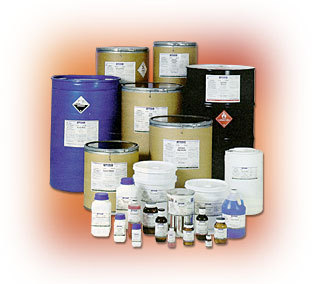
Tell us about your requirement

Price:
Quantity
Select Unit
- 50
- 100
- 200
- 250
- 500
- 1000+
Additional detail
Mobile number
Email

More Products in Chemical Supplies Category
4-Bromo Chlorobenzene
EINECS No : 2033905
Ingredients : Benzene ring substituted with bromine and chlorine
Density : 1.6 Gram per cubic centimeter(g/cm3)
Application : Other , Used as an intermediate in the production of dyes pharmaceuticals and pesticides
CAS No : 106398
Taste : Other, No distinct taste
3-Bromoaniline
EINECS No : 2097112
Ingredients : 3Bromoaniline
Density : 1.625 Gram per cubic centimeter(g/cm3)
Application : Used as an intermediate in organic synthesis pharmaceutical manufacturing and dye production, Other
CAS No : 591195
Taste : Not Applicable, Other
Para Bromo Phenol
EINECS No : 2034031
Ingredients : Bromine Phenol
Density : 1.8 Gram per cubic centimeter(g/cm3)
Application : Other , Used in chemical synthesis pharmaceuticals and agrochemicals
CAS No : 106412
Taste : Bitter
Sodium Citrate
EINECS No : 2006753
Ingredients : Citric acid and sodium hydroxide or sodium carbonate
Density : 1.7 Gram per cubic centimeter(g/cm3)
Application : Used as a food additive buffer and anticoagulant in medical applications, Other
CAS No : 68042
Taste : Other, Slightly salty and sour

Contact Details
JOSHI AGROCHEM PHARMA PRIVATE LIMITED
GST : 27AAFCJ1227Q1Z8
- 813, Topiwala Center, Opp. Railway Station, Goregaon (West), Mumbai - 400062, Maharashtra, India
- Phone :08045802973
 Send Inquiry
- For Chemicals - Solvents :
Mobile. +918097911779
For Pharma - API's :
Mobile. +918655564472
For Agro - Pesticides :
Mobile. +918080701491
For Metals :
Mobile. +919322422799


Developed and Managed by Infocom Network Private Limited.
