Call: 08045802973
 Send Inquiry
 Send Inquiry
6 BA
Price 3999.0 INR/ Kilograms
MOQ : 1 Kilograms
6 BA Specification
- Dosage
- 10-100 mg/L (depending on crop and application method)
- Classification
- Cytokinin
- Chemical Name
- Other
- Other Names
- 6-BA; Benzyl Adenine; BAP
- Type
- Plant Growth Regulator
- Physical State
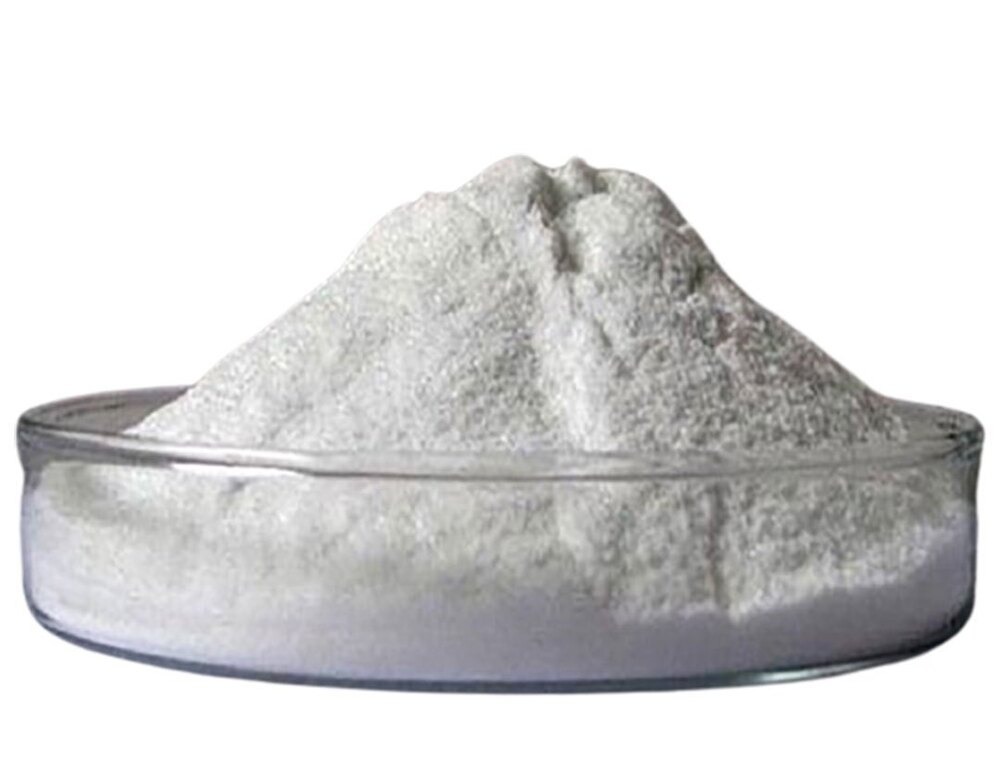
- Powder
- Release Type
- Other
- CAS No
- 1214-39-7
- Purity(%)
- 98%
- Application
- Promotes cell division, induces flower setting, stimulates growth in crops
- Color
- White
- Solubility
- 98%
- Storage
- Cool and dry place, protected from light
- Stability
- Stable under normal temperature and pressure
- Shelf Life
- 24 months
- Safety Precautions
- Avoid inhalation and contact with skin, use protective equipment
- Melting Point
- 230-233C
- Odor
- Odorless
- Packaging
- 1 kg/Aluminum foil bag, 25 kg/Drum
- pH (1% Solution)
- 7.0-8.0
- HS Code
- 29335990
- Molecular Formula
- C12H11N5
- Molecular Weight
- 225.25 g/mol
6 BA Trade Information
- Minimum Order Quantity
- 1 Kilograms
- FOB Port
- MUMBAI
- Payment Terms
- Others
- Supply Ability
- 1000 Kilograms Per Month
- Delivery Time
- 7 Days
- Packaging Details
- 25 KG
- Main Export Market(s)
- North America, Western Europe, Central America, Middle East, Australia, Africa, Asia, South America, Eastern Europe
- Main Domestic Market
- All India
- Certifications
- YES
About 6 BA
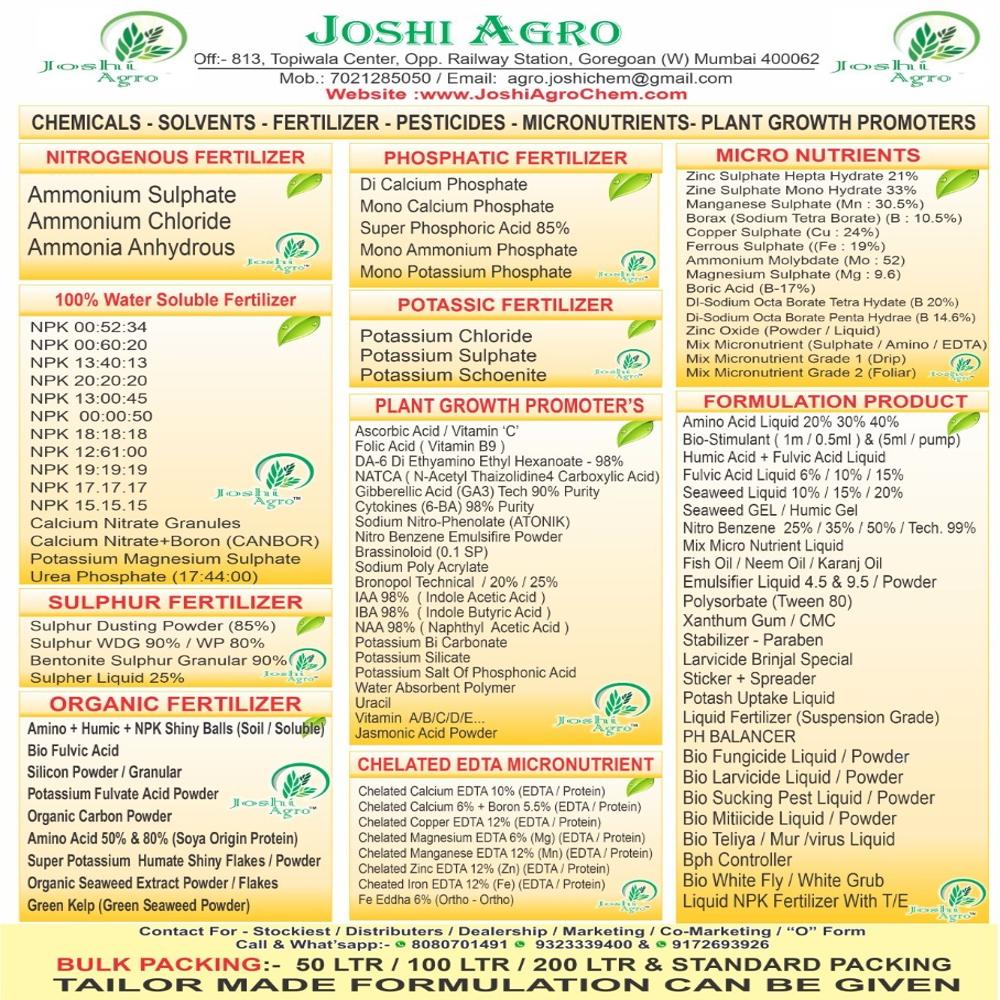
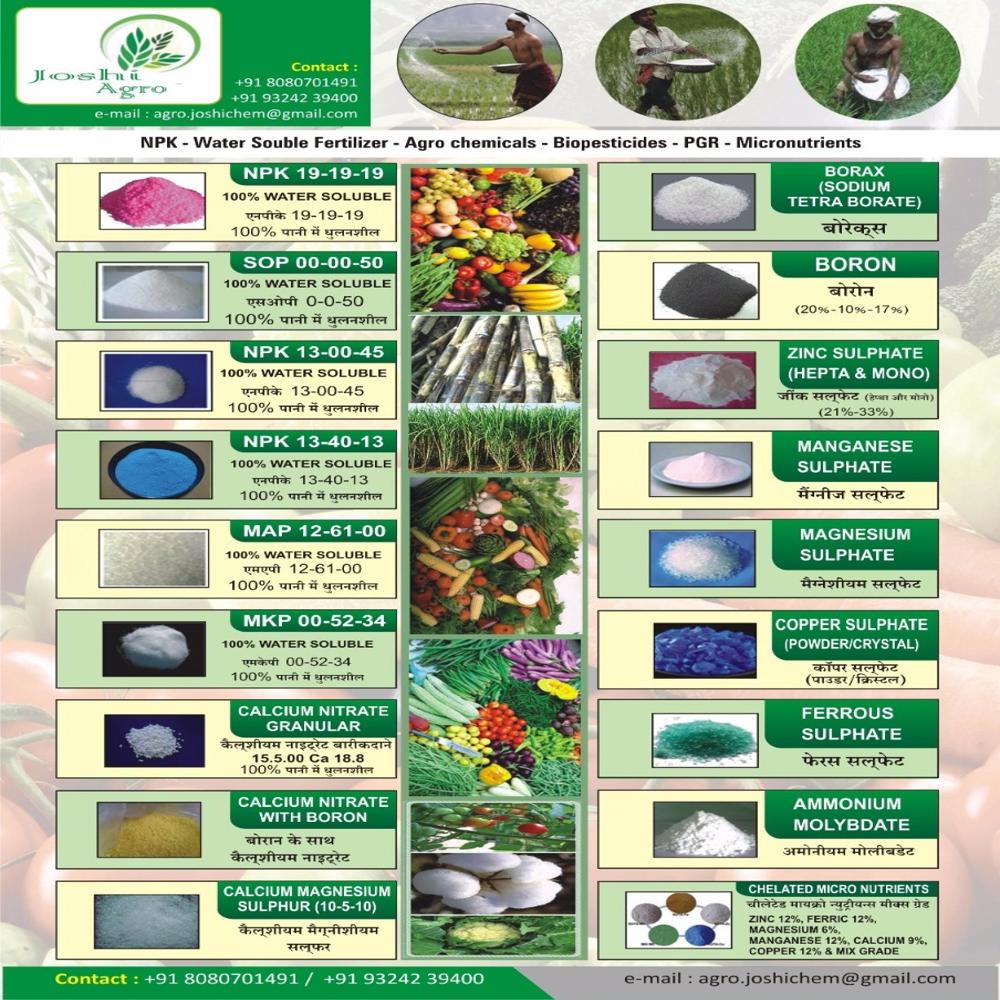
JOSHI AGROCHEM, MUMBAI SUPPLIER OF 6 BA (BENZYL AMINOPURINE)-CYTOKINES-WS/SS AND WIDE RANGE OF PGRPRODUCT PACKING 1 KG
- Promotes Cell Division & Growth: Stimulates overall cell proliferation and expansion, leading to faster, larger growth.
- Increases Branching & Tillering: Interrupts apical dominance, encouraging lateral buds to grow, creating bushier plants with more flowers and shoots, ideal for propagation.
- Enhances Flowering & Fruit Set: Stimulates blossom formation and fruit richness, improving crop marketability and yield.
- Anti-Aging & Greening: Inhibits chlorophyll, protein, and nucleic acid breakdown, keeping leaves green longer and extending freshness.
- Improves Stress Tolerance: Helps plants cope with drought, cold, and salt stress.
- Better Quality & Yield: Increases leaf surface area, improves grain filling, and boosts overall crop quality.
- Tissue Culture: Essential for promoting shoot regeneration and proliferation in lab settings.
Applications and Benefits
6-BA is widely utilized to encourage vigorous cell division, flower setting, and overall growth in agricultural crops. As a cytokinin, it enhances plant development, leading to superior yield and improved crop quality. Its effectiveness across various crop types makes it an essential additive for both large-scale farms and specialty horticulture.
Physical and Chemical Properties
6-BA presents as a white, odorless powder with high solubility (98%) and purity (98%). The compound has a stable melting point between 230-233C and maintains stability under standard storage conditions. Optimal storage is in a cool, dry place, protected from light to ensure maximum efficacy during its 24 month shelf life.
Safe Handling and Packaging
Appropriate safety precautions such as avoiding inhalation, wearing protective gear, and preventing skin contact are vital when handling 6-BA. It is packaged securely in 1 kg aluminum foil bags or 25 kg drums, suitable for long-distance transport. The product is classified under HS code 29335990 and should be handled according to recommended guidelines.
FAQ's of 6 BA:
Q: How is 6-BA (Benzyl Adenine) typically used in agriculture?
A: 6-BA is primarily used as a plant growth regulator to stimulate cell division, induce flower setting, and promote robust growth in crops. Its application rate ranges from 10-100 mg/L, depending on the crop variety and method of application.Q: What is the recommended process for applying 6-BA to crops?
A: 6-BA should be dissolved to achieve a 1% solution, as per recommended dosages, and then applied through foliar spray or as a dip treatment. Always follow specific guidelines for each crop to achieve optimal results and ensure uniform distribution.Q: When is the best time to use 6-BA on plants?
A: The ideal timing for application is during active growth periods or prior to flower initiation, as this maximizes its benefits in promoting cell division and setting flowers. Adjustments may be required based on crop type and environmental conditions.Q: Where should 6-BA be stored to ensure maximum shelf life?
A: To preserve its quality and extend shelf life up to 24 months, 6-BA should be kept in a cool, dry area, away from direct sunlight and tightly sealed in its original packaging.Q: What safety precautions are necessary during handling and application of 6-BA?
A: Avoid inhaling powders and prevent skin contact by wearing protective clothing and gloves. Handling should be done in well-ventilated environments to minimize exposure.Q: What are the main benefits of using 6-BA as a plant growth regulator?
A: 6-BA significantly enhances crop growth, supports flower setting, and increases overall yields by efficiently regulating physiological processes within plants, making it a valuable tool for both commercial and specialty agricultural producers.Q: How soluble is 6-BA, and how does this affect its application?
A: With a solubility of 98%, 6-BA easily dissolves in water, ensuring thorough mixing and even coverage during foliar application or dipping, thus delivering consistent results across treated crops.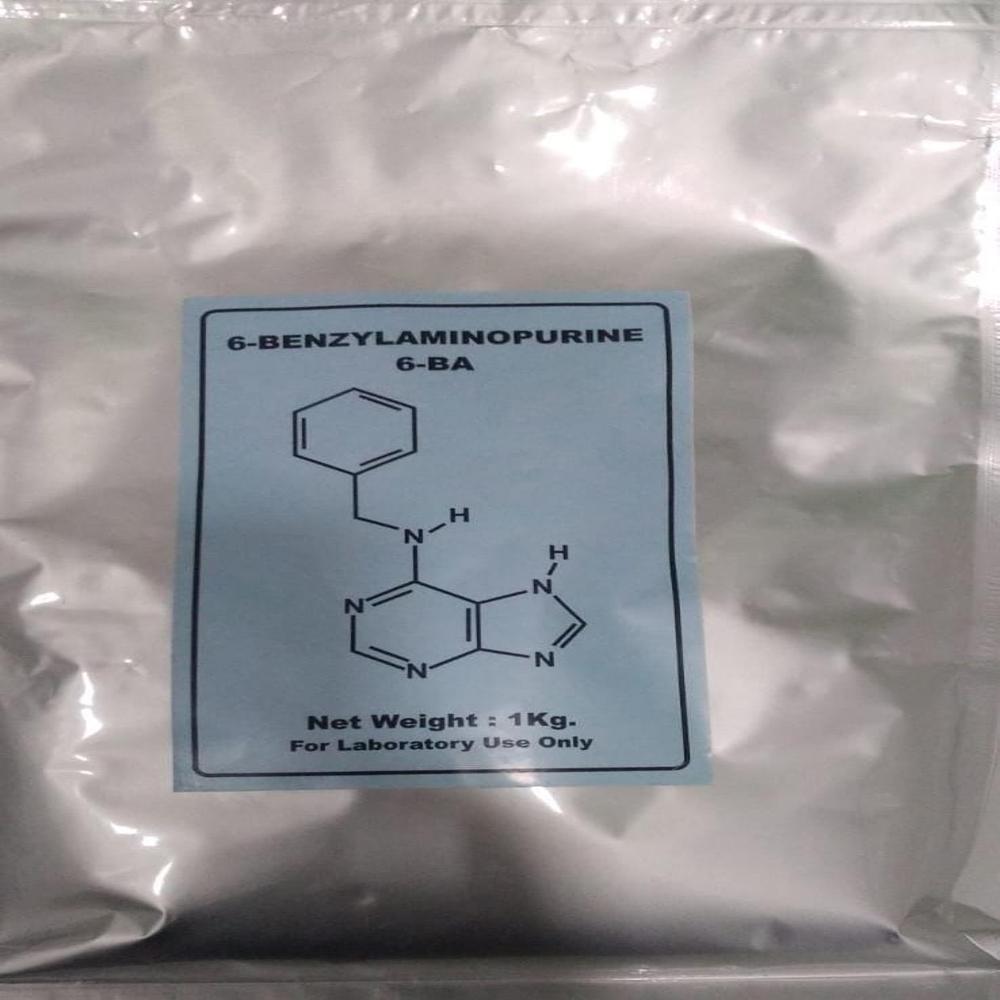
Tell us about your requirement

Price:
Quantity
Select Unit
- 50
- 100
- 200
- 250
- 500
- 1000+
Additional detail
Mobile number
Email

More Products in Agro Fertilizer Category
MONO POTASIUM PHOSPHATE
Storage : Keep in a cool, dry place
Application : Other, Fertilizer; Food Industry; Industrial Applications
Release Type : Quick
Solubility : Highly soluble in water
Classification : Other, Inorganic fertilizer
Purity(%) : 99%
SULPHATE OF POTASH
Storage : Dry Place
Application : Organic Fertilizer
Release Type : Controlled
Purity(%) : 99.9%
BORON .
Storage : Dry Place
Application : Agriculture
Release Type : Controlled
Solubility : In Water
Classification : Organic Fertilizer
ASCORBIC ACID
Storage : Dry Place
Application : Agriculture
Release Type : Controlled
Solubility : In Water
Classification : Organic Fertilizer

Contact Details
JOSHI AGROCHEM PHARMA PRIVATE LIMITED
GST : 27AAFCJ1227Q1Z8
- 813, Topiwala Center, Opp. Railway Station, Goregaon (West), Mumbai - 400062, Maharashtra, India
- Phone :08045802973
 Send Inquiry
- For Chemicals - Solvents :
Mobile. +918097911779
For Pharma - API's :
Mobile. +918655564472
For Agro - Pesticides :
Mobile. +918080701491
For Metals :
Mobile. +919322422799


Developed and Managed by Infocom Network Private Limited.
